Why tiny?
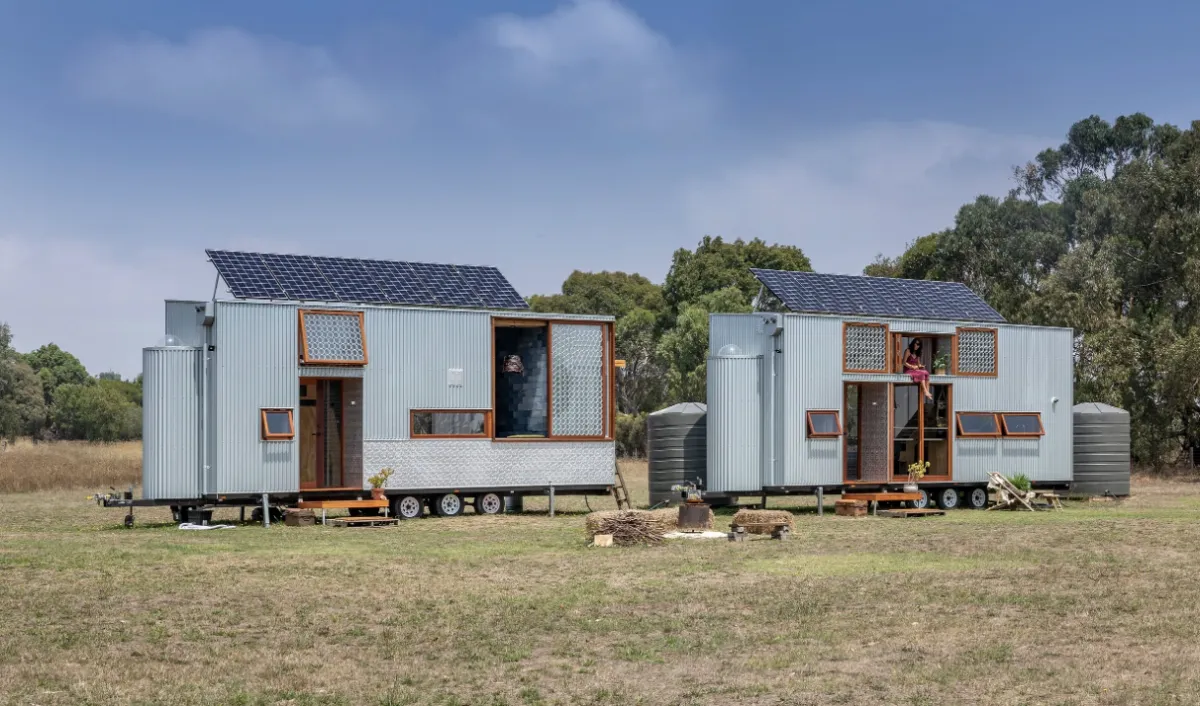
Affordable, eco-friendly, transportable, customisable, quickly built and quality made - tiny homes are appealing for many reasons.
Why people are attracted to tiny houses
Affordable
Tiny houses are getting more expensive as raw materials are increasing, yet they are still around 1/6-1/10 the cost of a traditional home or unit in most areas. Tinys sit on average at $80-160K which means people can afford them on today's wages. Knowing that you can own your own home is priceless security.
Eco-friendly
Tiny homes are eco-friendly on a few fronts. Firstly, they consume less resources. Their build area is smaller - 15-30m² compared to the average 137-232m² of homes and units, which means massively reduced volume of construction materials. Also, they need less heating and cooling due to the smaller volume. This reduced electrical load means that solar can become more appealing too.
Many people who are drawn to tiny houses also care about our environment so often eco-friendly materials, appliances and grey water systems are used.
In addition, the smaller footprint of tiny houses allows the surrounding land - that would otherwise be used for more building - to be used as food and flower gardens and outdoor space, reducing the heat island effect.
Simplicity
Many people find that by downsizing the number of possessions they have, a great weight is lifted from their shoulders and they can better enjoy life's experiences that give them more joy than consumption of material goods.
Transportable
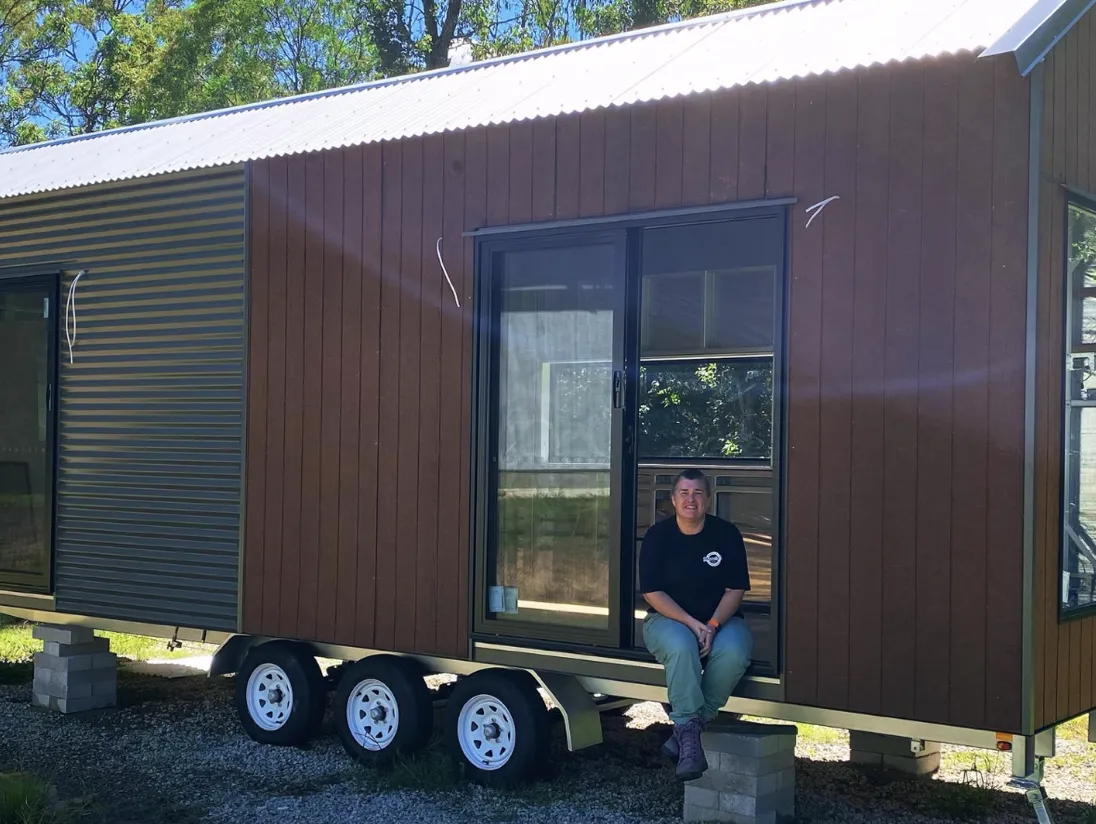
Unsurprisingly, one of the biggest drawcards to tiny houses (on wheels or skids) are that they are transportable which allows for them to be taken to a new property if circumstances change - such as moving from rented land to owned land, or moving interstate for a work opportunity.
In contrast to caravans, tiny houses are usually built for only a handful of moves in their lifetime as it can be costly to move them, requiring a heavy vehicle to tow or carry.
Customisable
One of the most beautiful things about tiny houses is that they are highly customisable. Although higher volume builders have set 'models' they use, even these allow for custom modifications. The majority of tiny houses are designed from scratch and are bespoke to the inhabitant's lifestyle, physical traits and habits. DIYers often focus on fitting out their tinys with elements that are second hand, artistic or sentimental which further enhances their uniqueness.
Speed of build
Compared to the average 4-12 months of a conventional build, tiny homes take builders as little as 4 weeks to complete. Of course, DIY builders can take over a year but the trade-off in time means the home is then highly fit-for-purpose for that person's lifestyle.
Quality Builds
Compared to caravans which are built for towability and lightness for travel, tiny houses are built as homes.
Fixtures are just one way you can see the difference. Because many tiny owners think of their tiny as their haven, they often use higher quality finishes and fixtures for floors, benchtops, splashbacks, doors etc.
Tiny houses are often built by registered builders and carpenters who have years of training in building structurally sound and safe homes.
It is however important for potential owners to do due diligence to check that a tiny home is built and finished by the relevant licenced trades.
Housing Diversity
If every suitable free standing home in Australia (7,624,415 in 2021) housed a tiny house we would get close to the goal of 1,000,000 homes in 5 years that the Federal Government has announced! This has benefits for people living in these areas by giving more choice in housing types, as well as closer communities and improved safety. Governments also reap benefits through lower costs to maintain infrastructure.
Who goes Tiny?
The tiny home community is a diverse bunch. Although we can’t speak for everyone, we have noticed some distinct groups of people who tiny houses particularly appeal to.
First home buyers
Most young people, even with full time work, do not have the means to save for a deposit for a traditional house. Buying a tiny home slashes rental costs and has the potential allow people to remain in suburbs near public transport by living in their tiny as a secondary dwelling. They then have extra money available to save for land or for a traditional house down the line.
Women over 55
Women over 55 are the fastest growing group at risk of homelessness in Australia. Often they have less superannuation, and less earning power than men their age due to structural inequalities. Tiny homes are a serious option for this demographic as they allow for independence, dignity and flexibility to live near friends or relatives, maintaining social connections.
Families
Many families are looking at ways to be closer to their children whilst having affordable, customised and flexible housing. When the kids start craving their own space families simply build another tiny, offering privacy and proximity.
The eco-conscious
Tiny homes are particularly appealing to people who want to reduce their environmental impact. They use fewer resources to build, often incorporating recycled materials, they consume less energy in heating and cooling. Increasing density in the suburbs is useful for reducing transport use as well as increasing resilience in our communities.
Home owners
Many home and land owners want to support others struggling in the housing crisis as well as offset their own expenses such as rates and mortgage repayments with some extra income. By offering a spot for someone with a tiny house to park, they also gain community connections.
First home buyers
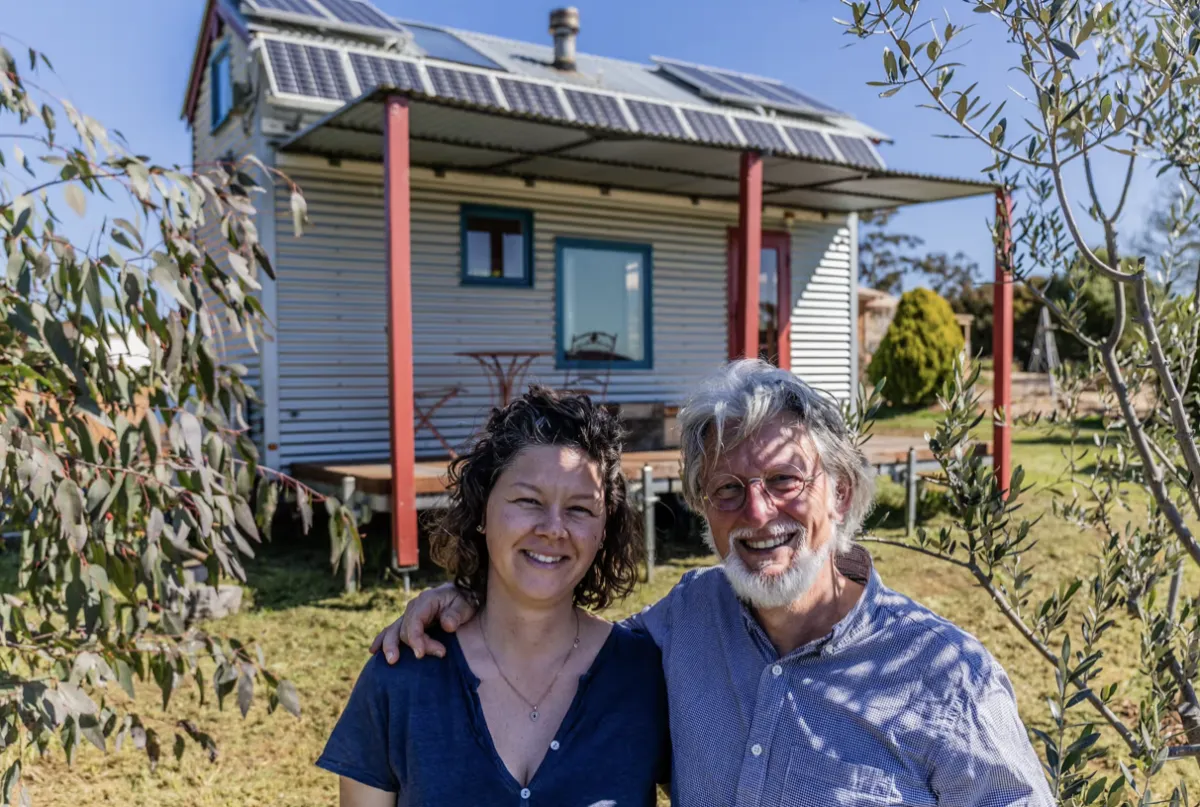
Most young people, even with full time work, do not have the means to save for a deposit for a traditional house. Buying a tiny home slashes rental costs and has the potential allow people to remain in suburbs near public transport by living in their tiny as a secondary dwelling. They then have extra money available to save for land or for a traditional house down the line.
Over 45 y/o, single women
400,000 women over 45 are at risk of homelessness in Australia and have been recognised as the fastest-growing group of homeless people in Australia. Often they have less super-annuation, and less earning power due to structural inequalities. Tiny homes are a serious option for this demographic as they allow for independence, dignity and flexibility to live near friends or relatives, maintaining social connections.
Families
Many families are looking at ways to be closer to their children whilst having affordable, customised and flexible housing. When the kids start craving their own space families simply build another tiny, offering privacy and proximity.
The eco-conscious
Tiny homes are particularly appealing to people who want to do what they can to reduce their environmental impact. Firstly, they use less resources to build, often incorporating recycled materials, they consume less energy in heating and cooling. Increasing density in the suburbs is useful for reducing transport use as well as increasing resilience in our communities.
Home owners
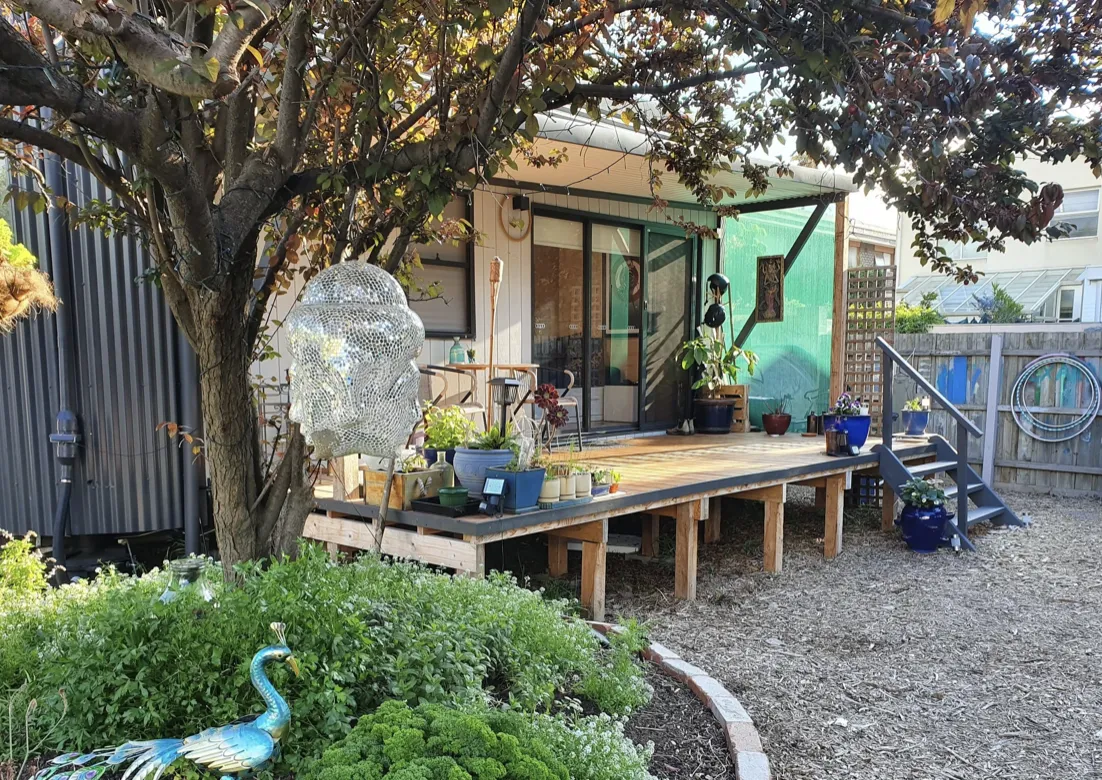
Many home owners want to do what they can to support others struggling in the housing crisis as well as reduce their own mortgages. By offering a spot for someone with a tiny house to park, they gain community connections as well as cash.
Tiny living FAQs
Is it just a trend?
No, tiny houses are not just a trend. This movement is growing bigger and bigger due to macro trends such as the increasing unattainability of housing, increasing cost of living as well as dire climate and environmental pressures.
Aren't they just caravans?
Not at all. Tiny houses are built specifically for long term living and most often built with high quality materials and designed with storage, comfort and liveability in mind. Many also have bespoke elements, custom designed especially for the person who owns them. They are subsequently heavier than caravans and built for longevity.
Why buy a depreciating asset?
Although technically tiny homes can be a depreciating asset, people consider more than just the financial return when deciding to invest in a tiny. It is often a very personal decision that allows focus on lifestyle considerations over resaleability.
How do I get insurance on a tiny?
Insurance for Tiny Homes on Wheels and Skids can be one of the most difficult elements when looking to live tiny. Be very careful and do due diligence when researching insurance options. Look over what is actually insured under a policy as some companies do not cover essential elements.
Why aren't there clear regulations
Because tiny homes are a relatively new housing typology, they don't neatly fit into existing legislative frameworks. It is not clear and simple to navigate. As a new housing typology and due to different factors for different locations, they are affected by federal, state and local frameworks and policies.
Subscribe for tiny house updates
Members stay informed with our quarterly newsletter, featuring the latest news and insights. Not ready to join? You can still sign up to hear about upcoming events.
CONNECT WITH ATHA

